


Suit and Shoes – How to Match Them
Everyone knows that matching your suit and shoes properly is one of the key elements of personal style. It significantly affects how others perceive us – in business, social settings, and even how confident and comfortable we feel.
Unfortunately, it’s still common to see well-tailored, elegant suits ruined by poorly matched shoes. The mismatch can undermine the entire look and the effort put into selecting the suit. So, how do you choose the right shoes for your suit to create a harmonious, stylish ensemble? In this guide, we’ll show you three simple rules that will keep your outfits elegant and cohesive every time.
What Types of Suits Are There?
For clarity, we’ll group suits into four main categories:
Formal evening suits: Typically black or dark navy suits worn for high-level events in the late afternoon or evening.
Formal daytime suits: Navy suits worn during the day for significant events like weddings, thesis defenses, or important business meetings.
Daytime business suits: Everyday workwear, often part of a corporate dress code. Usually grey or navy, with lighter and more relaxed construction for long wear.
Casual suits: A broad category of suits worn for pleasure or daily wear, such as linen summer suits or corduroy winter versions in bolder colors.
Naturally, each type of suit pairs best with specific shoe styles.
Three Rules for Matching Shoes to a Suit
1. Follow the Dress Code
Dress codes exist to ensure that any man following them will look at least appropriately dressed. Always consider the level of formality before choosing your shoes.
2. Color Coordination
Category 1 (Evening Formal): Only black shoes.
Category 2 (Daytime Formal): Black, dark brown, or medium brown shoes.
Category 3 (Business): Brown shoes (any shade), black as a backup.
Category 4 (Casual): Go bold – browns, bottle green, navy, and other creative choices work.
3. Shoe Type by Suit Category
Category 1: Only plain oxfords (wholecut, cap toe, or plain toe).
Category 2: Cap toe or plain oxfords; black derbies or monk straps as alternatives.
Category 3: Brogue oxfords, derbies, monk straps, loafers.
Category 4: Everything from brogues to loafers, moccasins, and even leather sneakers.
4. Shoe Leather Type by Suit Category
Category 1: Polished or patent leather only.
Category 2: Full-grain leather, optionally polished.
Category 3: Full-grain, pebble grain (textured), or suede.
Category 4: Any leather type – smooth, suede, woven, polished.
These are the core rules. While basic, they help you stay on point with dress codes and avoid fashion missteps.
Practical Examples
For a black suit at a formal event (e.g., New Year’s Eve dinner): Follow all three rules – choose black cap toe oxfords made of polished leather.

Photo: Michał Dymek, a Polish cinematographer nominated for an Oscar, wore black patent leather Oxford shoes by Partigiani.
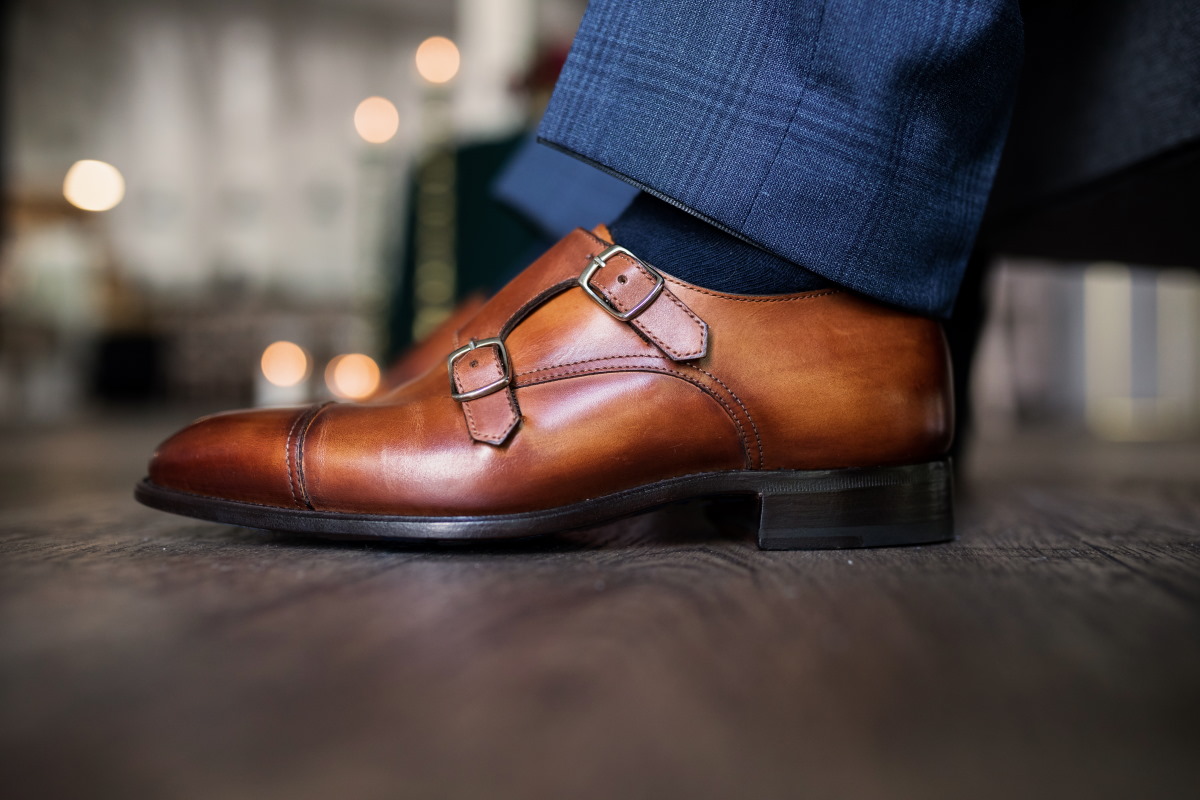
For a grey business suit: Go with brown monk straps in leather or suede, depending on your personal taste.
Quick Chart: Suit Type vs. Shoe color
Evening Formal: Black
Daytime Formal: Black Dark Brown
Business: Brown Black Burgundy
Casual: Tan Green Navy
Need Help Choosing?
One of the greatest values we offer at Klasyczne Buty is expert advice. Visit us in Warsaw or Gdańsk, or contact us at +48 790 507 208 or sklep@klasycznebuty.pl, and we’ll help you find the perfect shoes for your suit.